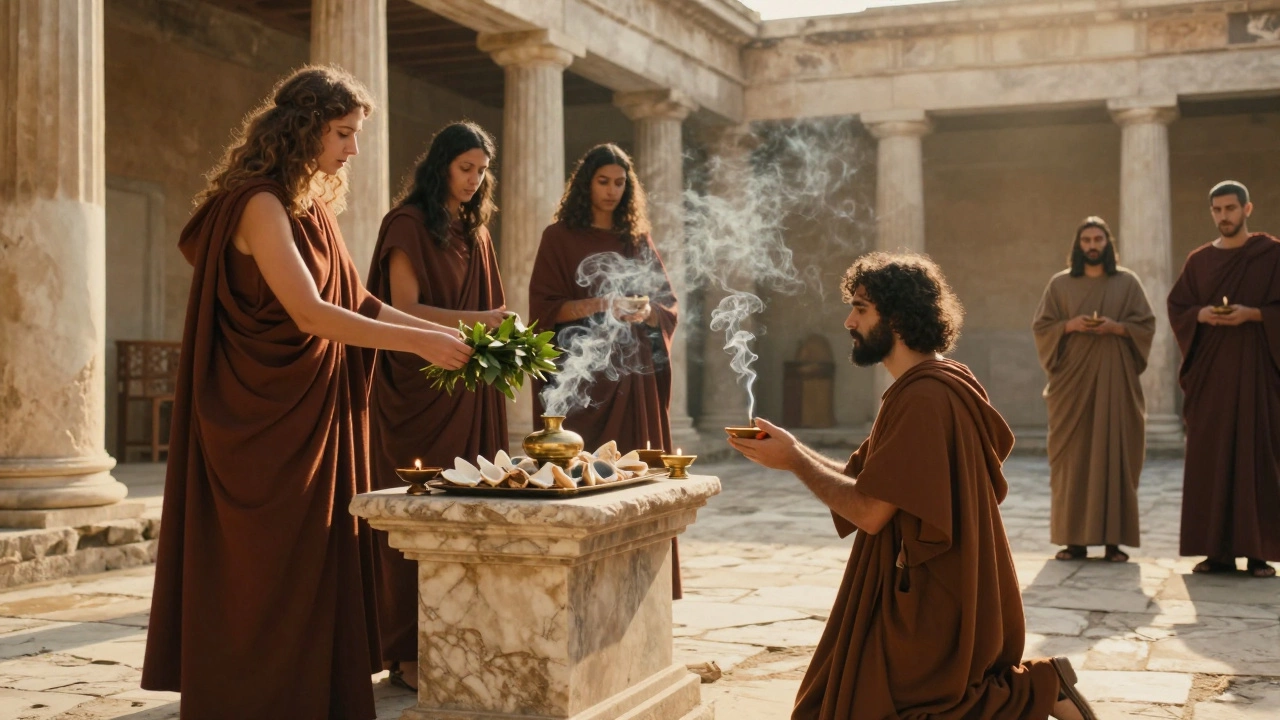
Aphrodite wasn’t just the goddess of love and beauty-she was also tied to sacred sex work in ancient Greece. In temples across Corinth and Cyprus, women known as hierodules offered rituals that blended worship with physical intimacy. These weren’t brothels in the modern sense, but sacred spaces where sex was part of devotion, not commerce. The line between divine service and sexual labor was blurred, and people didn’t see it as shameful. It was simply part of how the world worked. Today, that same tension echoes in places like Dubai, where the legal gray zone around intimacy services leads many to seek massage escort dubai under the radar, often framed as therapeutic or private sessions.
The connection between goddess worship and modern sex work isn’t just symbolic. In ancient times, temple workers were respected, sometimes even wealthy. They held status, could own property, and were protected by law. That’s a far cry from how many sex workers are treated today-criminalized, stigmatized, or ignored. But the roots are there: physical intimacy as a form of connection, healing, or transaction. Even the term "happy ending" has ancient parallels. In Greek symposia, guests were often attended by women who provided companionship, conversation, and sometimes more. The goal wasn’t always orgasm-it was pleasure as part of social bonding.
How Sacred Rituals Became Criminalized
The shift came with Christianity and Roman moral reforms. Sex outside marriage, especially when tied to money, was labeled sinful. Temples were shut down. Priestesses were driven out. What was once sacred became taboo. By the 4th century CE, the Roman Empire had outlawed temple prostitution outright. The idea that sex could be spiritual, not sinful, was erased from official history. For centuries, sex work was pushed underground, then framed as exploitation-even when many women chose it for survival or autonomy.
Modern laws still carry that bias. In places like Dubai, where Islam shapes public morality, any form of paid sexual contact is illegal. But demand doesn’t disappear. It just moves into hidden spaces. That’s where terms like "escort massage" appear-not as a legal category, but as a coded phrase used by people seeking discretion. The service might involve touch, relaxation, or companionship. Whether it ends in sex depends on the individuals involved, and that’s rarely discussed openly.
The Dubai Reality: Law, Demand, and Discretion
Dubai is a city of contradictions. It’s one of the wealthiest places on Earth, with towering skyscrapers and luxury hotels. Yet, beneath the polished surface, there’s a thriving underground economy of intimacy services. Tourists, expats, and locals all seek out discreet encounters. Many use the language of wellness to mask what’s really happening. "Massage escort dubai" is one such phrase. It sounds harmless-like a spa visit gone private. But it’s often a euphemism for something more.
Police don’t target clients often. They go after organizers, advertising networks, or landlords who rent to sex workers. The workers themselves rarely face arrest unless they’re caught in a raid. That’s why these services operate through word-of-mouth, encrypted apps, or private websites. The clients? They want comfort, connection, or release. The workers? Many are migrants from Southeast Asia or Eastern Europe, working in a system that offers them income but no protection.
It’s not about morality. It’s about power. The law protects the wealthy and punishes the vulnerable. A tourist who pays for a "dubai happy ending" walks away with no record. The woman who provided it risks deportation, violence, or worse. The imbalance is stark-and it’s been this way since ancient times.

Aphrodite’s Legacy: Why This Matters Today
When we look at Aphrodite, we see a goddess who didn’t separate love from sex, or sacred from sexual. She didn’t judge. She simply was. Modern societies, by contrast, try to control, shame, or erase these natural human needs. But they don’t go away. They just become more dangerous.
There’s a growing movement to decriminalize sex work-not to promote it, but to protect those who do it. Countries like New Zealand and parts of Australia have shown that removing criminal penalties reduces violence, improves health outcomes, and gives workers more control. In Dubai, that’s not an option. But awareness matters. Understanding the history helps us see that this isn’t about "bad people" doing "bad things." It’s about systems that punish the powerless while letting the powerful stay hidden.

What’s Different Now? And What’s Not?
Today, technology changes how sex work operates. Apps replace street corners. Digital payments replace cash. Social media replaces flyers. But the core dynamic hasn’t changed: people pay for touch, attention, and intimacy. The only difference is the language used to hide it.
"Escort massage" is one of those words. So is "massage escort dubai." And "dubai happy ending." These aren’t just SEO phrases-they’re survival tactics. People use them to avoid detection, to protect their privacy, to find what they need without risking arrest. They’re modern versions of the temple offerings of old: coded, quiet, and necessary.
What’s missing today is the sacredness. In ancient times, sex work had meaning. It was part of ritual, community, and belief. Now, it’s treated as a crime or a vice. That’s not progress. It’s forgetting.
Where Do We Go From Here?
The answer isn’t to legalize or ban. It’s to listen. Listen to the women who do this work. Listen to the men who seek it. Listen to the people who’ve been silenced by law and shame.
History shows us that when societies try to erase sex work, they don’t erase the need-they just make it more dangerous. Aphrodite didn’t care about your passport, your religion, or your bank account. She cared about connection. Maybe it’s time we remembered that.